Husn-ul-Khātimah
A first hand account of the Shahdat-ul-Umrah of Shaykh Abulhasan Khatib al-Makki
On the 28th of March 2011, we, the Masjid-ul-Quds Umrah group embarked on an unforgettable spiritual journey to the Holy Land. The most historical and extraordinary event of the whole trip was the most auspicious and blessed death of “the father of the group” Shaykh Abul-Hasan Khateeb right in front of the Holy Ka’bah. While every other Muslim prays for a death on Friday or in the holy Mosques or during Umrah, very few are actually granted such a privileged death by Allah (SWT). I had heard and read of great Awliya who were granted such auspicious endings. During our blessed trip, I had the honor of actually witnessing such a great sight with my own eyes.
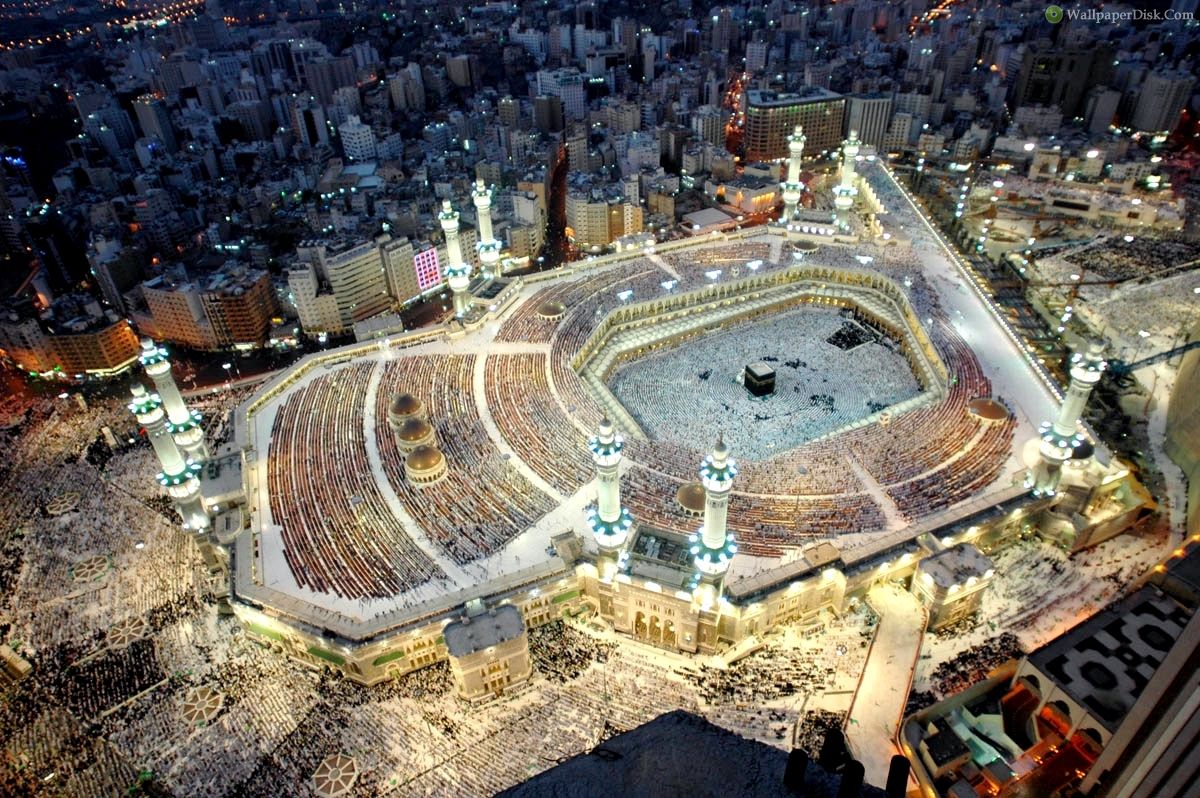
We had put on our Ihrams from Istanbul airport and arrived in Makkah on Friday Morning. On the journey Shaykh Abul-Hasan Saheb was enjoying listening to our Na’ats and poems in yearning for the Holy land. One Couplet I read was very much liked by him. It said: Kabay pay parhi jab pehli nazar…kya cheez hai dunya bhool gaya…… “When my eyes fell on the Kabah for the first time, I forgot all about this World!”
“He is Shaheed al-Umrah!”
After performing the Friday prayers and Asr salah in the holy Haram, we embarked on the Umrah. Shaykh Abul-Hasan performed the Umrah with everyone with a clam pace and finished at the same time we all did, despite his old age. Thereafter, I saw him walking with his eldest son Ismail behind the Sacred Maqam Ibrahim. He looked as if he was on his way “back”. A minute later, I heard a commotion nearby and saw a crowd gathering. As I went closer, I saw him lying there, and was told that he had passed away. The first thing I said was: Allahu Akbar Allahu Akbar! He is Shaheed al-Umrah! What a death! What a place! Allahu Akbar!
As the family and the group stated to gather around him crying, I was still amazed at this privilege that Allah had granted him. His sons were saying: “This is the fulfillment of our fathers wish. He had always prayed to die in the Holy Land!”
The Strange Man
A strange man came and held his feet and sat there for half hour holding them. No one knew who he was. I felt he was taking the spiritual energy of Shaykh Abul-Hasan. Another man joined us and starting praising his death. This man remained with the janazah for hours after that. We discovered later on that he was a sayyid from Libya from the descendants of Hazrat Shaykh Abdul-Qadi al-Jilani (RA). This was an amazing coincidence as marhoom Maulana Abul-Hasan (al-Qadiri) was an avid lover of the Ahl al-Bayt and particularly of Shaykh Shaykh Abdul-Qadi al-Jilani (RA), for whose soul he had just made a Khatam-al-Quran before the trip. The Libyan Jilani sayyid cried when he heard of that. Older men were also looking at the body in Ihram and saying: “Don’t be sad, O Sons, we wish we have this type of death!!!”.
Janazah Salah
Subhan-Allah! Every person we would meet in the Holy Land after that, would give congratulations rather than condolences to the sons of the marhoom! The Jazanah Salah was held the next day at the Haram with his blessed body lying in front of the Holy Ka’bah! It was a lovely and peaceful scene. Thereafter the body was buried in the Holy Soil of Makkah in the Maqbarat al-Sharai’. Another Janazah Salah was also held for him in Jeddah by the respected Sayyid Abd-Allah Fad’aq in his home.
The group made khatams for him in Makkah, in the hotel and the Haram. In Medinah, Shaykh Abd-al-Aziz Mikwar got a complete khatam Husn-ul-Khātimah: A first hand account of the Shahdat-ul-Umrah of Shaykh Abulhasan Khatib al-Makki recited for him in his Majlis and a special Du’a was made for him. My father Mr Ahmeduddin Owaisi also organized a Khatam al-Qur’an for him in Medinah, which was attended by such notables of Medinah as al-Sayyid Muhammad al-Tayyib al-Dabbagh, al-Habib Asim bin Yahya, Shaykh Fareed al-Maimani and Shaykh Hamid Rabbani al-Siddiqi. The latter’s attendance was very significant because he is the oldest living son of Mawlana Abdul-Aleem Siddiqi (RA), who was also the murshid of the marhoom! Qasa’id and Burdah were recitd by Sidi Bakheet Husain of Medinah, and a lecture was delivered by Shaykh al-Ninowy. In al these gatherings, the privileged death of Shaykh Abul-Hasan was extolled.
Ahaadith on Unique Death
The Ahadith of the Prophet have highlighted the auspiciousness and blessing of dying in Makkah, on a Friday and in Ihram. Imam Abd-al-Razzaq and Al-Haytami narrate that the Prophet (SAW) said:
“Whoever is dies in one of the tow holy Harams, shall be safe on the Day of Resurrection”
Imam al-Fakihi narrated that the Prophet (SAW) said: “Whoever is buried in Makkah, shall be safe on the Day of Resurrection”
Imam al-Tirmidhi narrated that the Prophet (SAW) said:“No Muslim dies on the day or the night of the Friday except that Allah will spare him the trials of the grave”
Imam Muslim narrated that the Prophet (SAW) said about a person who died in Ihram:“Wash him with water and sidr and make his kafan in his two garments, and do not cover his face and head, and do not perfume him, for he shall be resurrected on the Day on the Day of Resurrection, making the Talbiyah (Labbayk)”
Can the end of anything good be anything but good?
Al-HamduliLlah! South African Muslims can be proud that one their elders was granted such an honorable death, in the most Sacred place (Makkah), on the most Sacred Day (Jumu’ah) and in the most Sacred State (Ihram). It is narrated that 70 prophets of Allah migrated to Makkah to die there in the Haram and are buried there (narrated by al-Tabari and al-Azraqi). A Million Muslims from all over the world, including countless Awliya and Salihin prayed the janazah on marhoom Abul-Hasan Saheb in the Haram al-Makki.
I was told that the marhoom used to love the reciting the Qur’an, listening to Na’ats and visiting the Mazaars of the Awliya! No wonder he “earned” such a death. A good ending is the confirmation of a good life. Our group was really honored to witness this Karamah with our own eyes. On the way back, I told the sons of Hazrat Abul-Hasan Khateeb: “We came here with him, but we go back without him. But be rest assured, the place where you are leaving him is better than anywhere else you could have taken him to”. May we all have such a Husn al-Khatimah! All praise be for Allah!