Muharram: Legacy of Nabi Musa and Imam Husayn
by Shaykh Sadullah Khan
We bid farewell to the old year by celebrating Prophet Ibrahim’s commitment to Allah displayed through his willingness to sacrifice his patient son, Prophet Ismā’īl (peace be upon them); and we welcome the new year by remembering the migration of Prophet Muhammad (pbuh) to Madinah, which marked the beginning of a period of enlightenment for civilization. This is also the month where we commemorate the martyrdom of Prophet’s beloved grandson, Imām Husayn, while we simultaneously reflect on the struggle of Prophet Mūsā (pbuh) against the oppressive Pharoah. Such Musawi–Husayni struggle has always raged on in a corrupted world. ‘Allama Iqbal said; Musa-o Fira’un Shabbīr-o Yazīd; In do quwwat az hayat āmad padīd “Ever since the beginning, two opposing forces have been at war – virtue and vice. Thus, Prophet Musa rose against Pharoah and Shabbir (Imam Husayn) rose against Yazid”
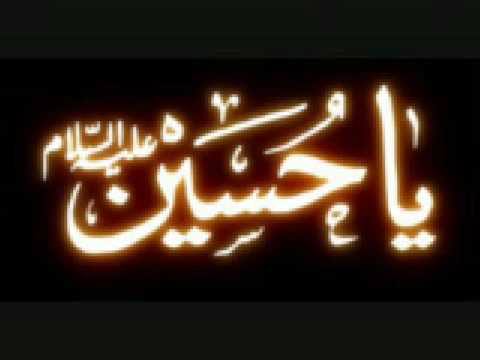
Defining Imām Husayn?
Imam Husayn is the son of Fatimah az-Zahrā, the daughter of the Prophet Muhammad, mercy unto all existence [Qur’an 21: 107]. His grandmother, Khadijah, was the first to embrace the Faith. The Prophet (pbuh) considerd both Khadijah and Fatimah “among the leaders of the women of Paradise” [Musnad of Ahmed ibn Hanbal] and said that “Fatimah is part of me, whoever hurts (azha haa) her hurts me.” [Sahīh Muslim]
The noble father of Husayn is Ali, who was a cousin and one of the most beloved and steadfast companions of the Prophet. And later became the fourth caliph of Islam. Imam ‘Ali, leader of the Faithful, the mawla (leader) to all those to whom the Prophet was the mawla [Sunan Tirmidhi]. Indeed, Ali is like the sun, Fatimah like the moon and Husayn a star in the galaxy of heroes.
Together with his brother Hasan, Husayn is considered among “leaders of the youth of Paradise” [Musnad of Ahmed ibn Hanbal]. We shall never forget how the Prophet descended from his pulpit to embrace and seat his grandson besides him before resuming his sermon, nor how he prolonged his prostration in order not to discomfort the other who had climbed on his back. The Prophet beseeched the Almighty; “O Allah, I love Hasan and Husayn, do love them and love those who love them”. [Sunan Tirmidhi]
To compound the tragedy, his martyrdom emphasizes that it was the grandson of the final Messenger (and his close relatives) who were brutally killed. It was a massacre of the progeny of the final Prophet of Allah.
– That family of the prophet of whom Allah invokes us through the Qur’an;
“Say (to the people, O Muhammad)! I ask of you no reward except that you love my family.” [Qur’an 42:23]. It was regarding this Qur’anic verse that Imām Shaf’i wrote in his poem
Ya āla-bayti Rasulillahi hubbakum Fardun minalāhi fil Qur’ani anzalah Yakfikum min ‘azimil fakhri annakum Man lam yusalli ‘alaykum la salāta lah
“O Family of the Prophet! Allah has made it obligatory on us in the Qur’an to love you. It is a matter of pride for you that without saluting you our salutations (salawāt) are invalid.”
- That Husayn who, together with his brother, is considered by the Prophet as sayyidā shabābi ahlil Jannah “leaders of the youth of Paradise” [Sunan al-Tirmidhi]
- That Husayn who carried the traits of the Prophet and who many companions considered as an image of his grandfather. The dear companion of the Prophet (pbuh), Anas Ibn Mālik narrates: “The head of al-Husayn was brought to Ubaidullah Ibn Ziyad and was put in a tray, and then Ibn Ziyad started playing with a stick at the nose and mouth of al-Husayn’s head, and saying something about his features.” Anas then said (to him): “Al-Husayn resembled the Prophet more than any other person.” [Sahih al-Bukhari]
- That Husayn of whom the Prophet said,“Husayn is from me and I am from Husayn. Allah loves whoever loves Husayn.” [Sunan al-Tirmidhi]
Yet, Imam Husayn was martyred at the hands of those who considered themselves followers of our beloved Prophet Muhammad, those who claimed to act in the name of Islam yet unremorsefully and shamelessly were prepared to obliterate its true exponent; those who (like so many today) are prepared to kill for Islam yet are unable to live by it.
Yes, Imam Husayn was martyred at the hands of those who would kiss the Black Stone (because the Prophet kissed it), yet cut off the precious head of that dear grandson of the Prophet, a head which the Prophet so often caressed and kissed with affection.
Nabī Mūsa, Nabī Ibrahīm and Imām Husayn
The brave Prophet Moses did not fight the pharaoh to become king, neither did the righteous Imam Husayn take on the army of the corrupt Yazid merely to become caliph The Makkan struggle for the manifesting and upholding the values of Islam was founded with love and veracity by the family of Ibrahim and continued with love and patience through the family of Muhammad (pbut), as ‘Allama Iqbal says; Sidq-e Khalil bhi hay ishq, sabr-e Husayn bhi hay ishq Ma’rika-e-wujud mayn Badr-o-Hunayn bhi hay ishq
“The veracity of Prophet Ibrahim is love, so too the patient perseverance of Imam Husayn is love. Just as Prophet Muhammad’s selfless struggle at Badr and Hunayn too was love (for Allah, truth and justice).”
Rather,
– their effort was a universal lesson which left a lasting legacy;
– teaching humankind through the inscription of blood on the scrolls of human history,
– how they conveyed to the world, through their struggle, the meaning of life;
- that that living is truly of value that offers itself for a cause greater than its self,
- that to die with honor is better than living in subjugation to injustice.
The lesson is ….Not only that they were prepared to believe what is right, but do what is right, that they were living by values which they were willing to die for, selflessness not selfishness; humility not ego, principle not power. Shā’ir-e-Inqilāb or The Revolutionary Poet Josh Malīhābadi
Jo sāhib-e-mizāj-e-nabuwwat thah woh Husayn
Jo wārith-e-zamīr-e-risālat thah woh Husayn
“Of the attributes of the Prophet, the perceiver was Husayn,
of the holiness of the Prophet, the inheritor was Husayn”.
How many are there even today who shy away; not only from mentioning the struggle at Karbala, but from the very memory of Imam Husayn. Allah forbid that we ever become of those who forget and may we never be of those who refuse to remember.